Welding is a vital skill in numerous industries, from construction to automotive repair, yet many aspiring welders wonder: how long does it really take to become proficient? With the right guidance and commitment, mastering techniques like MIG, TIG, and stick welding can be both achievable and rewarding. Understanding the timeline to become a proficient welder not only helps you set realistic career goals but also eases concerns about training duration and investment.
In this complete timeline guide, we’ll break down the stages of becoming a welder, covering essential training paths, hands-on experience, and certification processes. Whether you’re a high school graduate considering a trade or an experienced craftsman looking to sharpen your skills, this guide aims to illuminate your welding journey. Stay with us as we explore the steps and timelines that lead to successful welding careers, ensuring that you are well-equipped to make informed decisions along the way.
Understanding the Welder Career Path: An Overview
The journey to becoming a skilled welder is not just a path to a job; it’s a commitment to mastering a craft that is integral to numerous industries, from construction to automotive repair and manufacturing. Many aspiring welders dream of creating strong, lasting bonds in metal, and understanding the career path can help clarify how to turn that dream into reality. The initial steps typically involve gaining foundational skills through formal education or training programs, alongside a good understanding of material types such as aluminum and steel, and various techniques including MIG, TIG, and stick welding.
As you navigate this career path, it’s essential to recognize that each welding technique offers unique advantages depending on the application and material. For example, MIG welding is highly versatile and often favored in the automotive sector for its speed and efficiency, while TIG welding is preferred for thin materials due to its precision. Therefore, gaining exposure to these different methods during training is crucial for developing a well-rounded skill set.
After acquiring initial skills, many choose to enter apprenticeship programs, which provide invaluable hands-on experience in real-world settings. These opportunities allow welders to work alongside seasoned professionals, learning the nuances of equipment operation and safety protocols, which is paramount in this field. Safety must always take precedence, as the welding environment can present significant hazards if proper precautions are not followed.
Ultimately, a welder’s career is a dynamic journey with opportunities for advancement. By continuously enhancing skills, pursuing certifications, and specializing in specific techniques or industries, welders can significantly increase their earning potential and job security. This pathway not only opens doors to more advanced roles but also fosters a deep appreciation for the craft, empowering welders to produce high-quality work that stands the test of time.
Key Skills Required to Become a Skilled Welder
Skilled welders are the backbone of numerous industries, where precision and safety are critical in creating reliable and durable metal structures. To thrive in this challenging field, welders must cultivate a diverse skill set that encompasses both technical capabilities and soft skills. While the techniques may vary-such as MIG, TIG, or stick welding-the essential attributes remain consistent across all applications.
Among the top skills required is a solid understanding of welding techniques and materials. Welders should be proficient in various methods, recognizing when to apply MIG for its speed and adaptability in automotive manufacturing, or opting for TIG to ensure meticulous control with thinner metals like aluminum. Additionally, familiarity with the equipment, including welding machines, torches, and protective gear, ensures not only high-quality work but also safety in potentially hazardous environments.
Attention to Detail
Welding demands exceptional attention to detail. Every weld must be evaluated for cleanliness, penetration, and alignment to prevent structural failures. A skilled welder often relies on precise measurements and a keen eye for imperfections, continually refining their craftsmanship. This vigilance can drastically affect the integrity of the final product, making it a critical skill.
Problem-Solving Abilities
Another vital skill is the ability to troubleshoot and adapt under pressure. Each project may present unique challenges, from material variances to unexpected design changes. Effective welders must think critically and devise practical solutions on the fly, maintaining focus on both efficiency and quality. The dynamic nature of welding often requires creativity, especially when working with complex layouts or configurations.
Communication and Teamwork
Besides technical skills, effective communication and teamwork are paramount in ensuring project success. Welders frequently collaborate with engineers, fabricators, and project managers, making it essential to convey ideas clearly and listen actively to feedback. This collaborative spirit enhances workflow and fosters a safer work environment, where risks are minimized through shared knowledge and awareness.
Commitment to Safety
Finally, a commitment to safety cannot be overstated. The welding profession entails exposure to various hazards, including intense heat, flying sparks, and toxic fumes. Skilled welders adhere strictly to safety protocols, utilize personal protective equipment (PPE), and continually educate themselves on best practices to mitigate risks. Their diligence not only protects themselves but also their colleagues and the integrity of the projects they work on.
Cultivating these skills enables welders to navigate their careers effectively, ensuring quality workmanship while advancing their professional paths. As the industry continues to evolve, remaining adaptable and willing to learn will further strengthen a welder’s value in the workforce.
Educational Pathways: Welding Courses and Certifications
Embarking on a career in welding opens a world of possibilities, and selecting the right educational pathway is crucial for success. With a diverse range of welding methods like MIG, TIG, stick, and flux-cored welding, aspiring welders can choose specialized courses that focus on these techniques, as well as the materials they will be working with-be it aluminum, steel, or alloys. Educational institutions, vocational schools, and community colleges often provide programs designed to deliver hands-on training and theoretical knowledge, giving students a solid foundation in welding principles.
Welding certification is a key component of career advancement. Programs typically include courses that cover the fundamentals of welding practices, safety standards, and equipment handling. After completing classroom instruction, hands-on training is often a significant component, allowing students to practice their welding skills under experienced instructors. Obtaining certifications from recognized organizations, such as the American Welding Society (AWS), not only enhances employability but also demonstrates a welder’s commitment to quality and safety in their work.
For those seeking to enhance their skills further, specialized courses are available in areas like underwater welding or robotics in welding. These certifications can indicate advanced skills, positioning welders for better job opportunities and potentially higher pay. Online courses have also become increasingly popular, allowing flexibility for those balancing work and education, targeting specific skills, or refreshing knowledge in particular techniques.
Finally, many welding programs offer apprenticeship opportunities, which combine classroom instruction with valuable field experience. Through apprenticeships, students learn directly from seasoned professionals, making this an excellent way to gain practical experience and build a professional network. The time investment for educational pathways can vary but typically ranges from several months to two years, depending on the level of certification sought and the training program structure. Overall, choosing the right educational pathway equips welders with the skills and qualifications necessary to excel in this dynamic and rewarding field.
Apprenticeships: Gaining Hands-On Experience
The opportunity to engage in a welder apprenticeship is akin to stepping into a workshop filled with valuable knowledge and priceless experience. These programs offer an essential bridge between the theoretical aspects learned in classrooms and the practical skills needed in the field. During an apprenticeship, typically lasting from one to four years, aspiring welders receive hands-on training under the mentorship of seasoned professionals. This direct exposure to real-world applications of welding techniques-ranging from MIG and TIG to stick and flux-cored welding-allows apprentices to refine their skills while navigating the intricacies of different materials such as aluminum and steel.
Mentorship is a vital component of the apprenticeship experience. Through regular guidance, apprentices learn not only the technical skills but also industry practices and safety protocols that are crucial for any professional welder. Apprenticeships typically include a mix of classroom instruction and applied practice. For instance, while a classroom session might cover the fundamental principles of heat transfer in welding, practical sessions allow apprentices to practice those principles under supervision, tackling challenges such as distortion control or achieving strong welds on different thicknesses of materials.
To maximize the benefits of apprenticeship programs, it’s crucial for apprentices to immerse themselves and actively participate. This involves asking questions, seeking feedback, and taking initiative in projects, which can help establish a strong working relationship with their mentors. Furthermore, as apprentices progress, they often have the chance to specialize in niche areas like underwater welding, aerospace, or pipe welding, further enhancing their expertise and marketability within the job market.
In summary, an apprenticeship serves as a robust foundation for a career in welding. It equips individuals with practical experience, technical skills, and a network of industry connections-all essential elements that not only enhance employability but also pave the way for future advancements in the field. As the demand for skilled welders continues to grow across various industries, those who successfully complete their apprenticeships position themselves as strong candidates for a successful and rewarding career.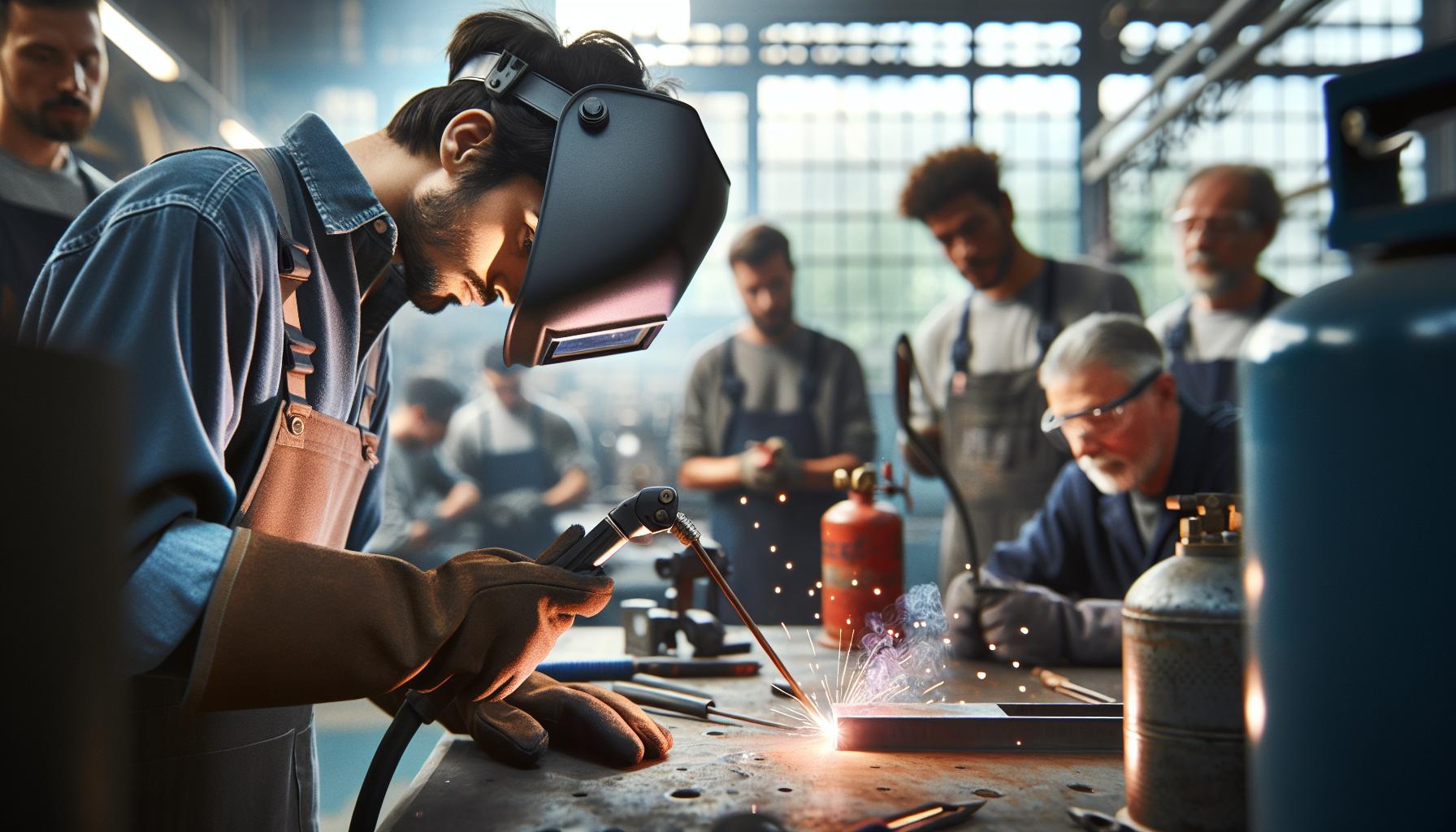
Types of Welding Techniques: MIG, TIG, and More
Welding encompasses a variety of techniques, each tailored to specific materials and applications, ensuring that aspiring welders have ample opportunities to refine their skills and specialize in different areas. Among the most prominent methods are MIG (Metal Inert Gas), TIG (Tungsten Inert Gas), stick welding, and flux-cored arc welding. Understanding these techniques is essential for determining the right approach to different projects and achieving high-quality results.
MIG Welding
MIG welding is among the most popular welding processes, especially for beginners. This technique uses a continuous solid wire electrode fed through a welding gun, complemented by an inert gas to shield the weld pool from contamination. Ideal for welding thin to medium-thickness materials like steel and aluminum, MIG welding offers speed and versatility. Its ease of use means that new welders can quickly become proficient, making it an excellent choice for automotive repairs and fabrication work.
TIG Welding
TIG welding contrasts with MIG in that it utilizes a non-consumable tungsten electrode to produce the weld. This method allows for greater control and precision, making it suitable for welding thinner materials or for applications requiring high-quality aesthetics, such as in art or intricate repairs. While it demands more skill and patience from the welder, TIG welding excels in its ability to fuse a diverse range of metals, including aluminum and stainless steel, thereby often being favored in industries such as aerospace and automotive for its superior strength and finish.
Stick Welding
Stick welding, or arc welding, involves using a consumable electrode coated in flux to join metals. This method is particularly effective when working with thicker materials and in outdoor environments where wind can disrupt shielding gases used in MIG and TIG processes. While it may be less aesthetically pleasing than other welds, stick welding is valued for its simplicity and ability to work in various positions, making it a staple in construction and heavy fabrication.
Flux-Cored Arc Welding
Flux-cored arc welding (FCAW) is similar to MIG but involves a tubular wire filled with flux, which allows it to perform better in thicker materials and in more challenging environmental conditions. FCAW can be performed with or without shielding gas, providing flexibility based on the project requirements. This method excels in industrial settings and is particularly useful for thick plate structures and heavy equipment repairs.
In choosing a welding technique, it is critical to consider the materials at hand, the desired quality of the weld, and the working conditions. Integrating proper safety protocols, such as using personal protective equipment (PPE) like helmets, gloves, and shielding clothing, enhances the welding experience while reducing risks. As you delve deeper into welding, experimenting with different techniques will not only enhance your skill set but also broaden your professional opportunities within the industry.
Equipment Essentials: What Every Welder Needs
A welder’s success hinges not only on their skills and technique but also on having the right equipment. From the welder’s torch to the boots they wear, each piece of equipment plays a crucial role in safety and performance, especially as one navigates various welding techniques such as MIG, TIG, stick, and flux-cored welding. Understanding which tools and materials are essential can significantly enhance both the quality of work and the speed at which a welder can operate.
Begin with the welding machine itself. For MIG welding, a good-quality MIG welder will feature adjustable settings for voltage and wire speed, allowing the welder to tailor the machine to the specific job. In contrast, TIG welders require a robust machine with direct current (DC) and alternating current (AC) capabilities, especially for aluminum. Stick welders are typically simpler, requiring less setup, but choosing a model with reliable arc stability can make a significant difference in performance.
In addition to the welder, personal protective equipment (PPE) is non-negotiable. Essential items include:
- Welding Helmet: Protects the face and eyes from intense light and sparks. Auto-darkening helmets offer convenience and improved safety.
- Welding Gloves: Should be made of heat-resistant materials to protect against burns and cuts.
- Protective Clothing: Flame-resistant jackets, sleeves, and pants reduce the risk of burns.
- Welding Boots: Steel-toed and heat-resistant footwear provide foot protection and comfort during long hours.
A reliable set of tools also facilitates various types of welding tasks. For example, clamps and fixtures are crucial for holding pieces in place; grinders and wire brushes are necessary for preparing metal surfaces; and a welding cart can help keep tools organized and portable. Additionally, having a range of filler materials for different metals (like aluminum and stainless steel) will directly impact weld quality and adaptation to various projects.
Lastly, safety protocols must be ingrained in the welder’s daily routine while they work with this equipment. This includes conducting regular checks of equipment for wear and damage, maintaining a clean work area to prevent hazards, and following proper disposal methods for hazardous materials like welding gases and residues. As welders gain experience, integrating advanced equipment such as plasma cutters or automated welders can help streamline their processes, ultimately reducing training time and enhancing productivity on the job.
Establishing a comprehensive toolkit is a critical step in the journey to becoming a proficient welder, setting the foundation for quality output and a successful career in this essential field.
Safety Protocols: Essential Practices for Welders
Ensuring a safe working environment is paramount in the welding profession, where exposure to hazardous conditions-from intense heat and harmful fumes to electric shocks-poses significant risks. Every welder should establish a proactive safety culture, which not only safeguards personal well-being but also enhances overall efficiency and quality of work. Engaging in safety protocols can reduce injury rates and improve productivity, making it essential for both beginners and seasoned professionals.
Employing a comprehensive Personal Protective Equipment (PPE) regimen is the first line of defense for welders. This includes:
- Welding Helmets: Essential for shielding the face and eyes from harmful UV rays, and intense light. Opt for auto-darkening versions that adjust to the brightness of the arc.
- Welding Gloves: Invest in heavy-duty, heat-resistant gloves to protect hands from burns and injuries while providing the dexterity needed for intricate work.
- Protective Clothing: Flame-resistant clothing is crucial to avoid injuries from sparks or molten metal. Long-sleeved shirts and pants made of cotton or other non-flammable materials are advisable.
- Welding Boots: Steel-toed and heat-resistant footwear not only protect feet from sparks and heavy equipment but also offer comfort during long work hours.
Another vital aspect of safety is maintaining a tidy work environment. Regularly checking equipment for wear and ensuring that work areas are free from clutter can mitigate the risk of accidents. Proper ventilation is also crucial in preventing the accumulation of dangerous welding fumes, so ensure that workspaces are well-ventilated or use fume extraction systems where necessary.
Additionally, understanding and adhering to industry-specific safety guidelines can make a significant difference. For instance, using proper lifting techniques when handling heavy materials and ensuring that all welding equipment is in optimal working condition can prevent numerous injuries. Regular safety drills and trainings should be conducted to keep safety protocols at the forefront of daily operations.
By fostering a culture that prioritizes safety, welders can significantly reduce the risks associated with their work and create a more productive and enjoyable environment. Regularly revisiting and updating safety practices will ensure that both new and experienced welders are equipped to manage and mitigate potential hazards effectively.
Timeframes for Training: How Long Each Step Takes
Becoming a proficient welder requires a commitment to mastering various skills, techniques, and safety practices over a structured timeframe. On average, aspiring welders can expect to spend 6 months to 2 years actively training, depending on the educational pathways and hands-on experience they pursue.
Most welding programs, either in community colleges or technical schools, offer diploma or certificate courses that typically last around 6 to 12 months. These courses cover essential subjects such as welding theory, safety protocols, and practical skills across various techniques including MIG, TIG, and Stick welding. Additional time may be needed for specialized training in areas like flux-cored welding or specific materials such as aluminum or stainless steel.
Apprenticeships
After completing formal education, many aspiring welders opt for apprenticeships, which usually last about 1 to 5 years. Apprenticeships provide invaluable on-the-job experience under the guidance of seasoned professionals, allowing trainees to refine their skills while also gaining insight into industry practices. This practical exposure is crucial in developing a comprehensive understanding of different welding processes and adapting to various work environments.
Continuous Learning and Certification
Once fundamental training is complete, many welders choose to pursue additional certifications from recognized organizations, such as the American Welding Society (AWS). Obtaining these certifications can involve further training, which typically spans several weeks to a few months, depending on the certification type and the proficiency level required.
In summary, the timeframe to become a skilled welder encompasses a variety of training avenues, with each step providing essential knowledge and experience to build a successful career in this rewarding field. Preparing adequately for each phase can lead to a strong foundation, opening doors to numerous opportunities within the industry.
Job Outlook and Demand for Welders in the Industry
The demand for skilled welders continues to be robust across various industries, making it a stable career choice for those entering the field. The U.S. Bureau of Labor Statistics (BLS) projects an approximate growth rate of 3% for welding jobs from 2021 to 2031, which is in line with the average for all occupations. Factors contributing to this demand include ongoing infrastructure projects, the need for skilled technicians in manufacturing, and advancements in the construction industry, particularly in sectors such as shipbuilding and automotive manufacturing.
Welders are integral to a variety of industries including construction, manufacturing, and energy, particularly in areas involving the fabrication of metal components and structures. As industries evolve, the skillset required for welders is also expanding. Today, proficiency in various welding techniques such as MIG, TIG, and flux-cored welding becomes not just an asset but a requirement. As technology advances, welders who can adapt to newer methods and machinery will stand out in the job market.
Moreover, the industry’s aging workforce intensifies the demand for new welders. Many experienced professionals are nearing retirement, creating a gap that new entrants must fill. This shift not only highlights the necessity for training and certifications but also provides opportunities for younger welders to establish their careers.
On the safety front, the importance of adhering to safety protocols cannot be overstated. Welders are at a higher risk of job-related injuries, making comprehensive training in safety methods essential. Organizations are increasingly prioritizing safety, which contributes to the overall job security for welders who can demonstrate their commitment to safe work practices.
In summary, the job outlook for welders remains positive, driven by a convergence of factors from technological advancements to workforce demographics. For aspiring welders, understanding these dynamics can enhance their career planning and readiness, ensuring they are well-prepared to meet industry demands.
Salary Expectations: What Welders Can Earn
An intriguing aspect of pursuing a career in welding is the potential for lucrative earnings. The salary of a welder can vary significantly based on several factors such as geographic location, industry sector, level of experience, and type of welding performed. According to the U.S. Bureau of Labor Statistics, as of May 2021, the median annual wage for welders, cutters, solderers, and brazers was approximately $47,010, but this figure can exceed $65,000 for those with specialized skills or advanced certifications.
There are multiple pathways that can influence a welder’s earning potential. For instance, welders skilled in high-demand techniques such as TIG (Tungsten Inert Gas) or MIG (Metal Inert Gas) welding often find themselves earning higher wages due to the complexity and precision required for these methods. Similarly, those working in industries such as aerospace or oil and gas may earn substantially more than those in general construction, reflecting the specialized nature of their work. It’s also worth considering that certifications from recognized organizations can lead to higher pay, as employers often prioritize certified welders for their skills in ensuring quality and safety.
Regional Pay Variances
Geographic location greatly influences welding salaries. Urban areas with thriving industrial sectors generally offer higher wages compared to rural locations. For example, states with a robust manufacturing base-like Texas, California, or Michigan-often provide higher average salaries for welders, sometimes reaching up to $75,000 or more for experienced professionals. The following table illustrates average annual salaries by state:
| State | Average Annual Salary |
|---|---|
| Texas | $56,410 |
| California | $54,320 |
| Michigan | $49,880 |
| New York | $50,850 |
Factors Affecting Salary Growth
Experience plays a crucial role in a welder’s salary trajectory. Entry-level welders will typically start at the lower end of the pay scale, but as they gain hands-on experience, earn certifications, and develop specialized skills, they can expect significant salary increases. Additionally, the opportunity to take on supervisory roles or move into training positions can further enhance earning potential. Continuous learning and adapting to new technologies, such as automation in welding processes or advancements in welding equipment, are essential for welders aiming to maximize their earnings and job security in an evolving industry landscape.
Overall, the financial rewards of a welding career are promising, particularly for those who embrace ongoing education and training. By leveraging skills, experience, and strategic positioning within the industry, welders can significantly enhance their earning potential and career fulfillment.
Advancing Your Welding Career: Specializations and Growth
Advancing in the welding profession involves a combination of specialized training, skill enhancement, and strategic career moves. As the industry continues to evolve, welders have a wealth of opportunities to increase their qualifications, expand their roles, and ultimately boost their earning potential. Engaging in specialized fields such as MIG (Metal Inert Gas), TIG (Tungsten Inert Gas), or even advanced techniques like robotic welding can significantly amplify career prospects. Each specialization demands a unique set of skills and provides different career pathways that can lead to increased responsibilities and rewards.
Pursuing certifications in various welding methods is an effective way to stand out in the job market. Certifications-such as those offered by the American Welding Society (AWS) or other recognized organizations-validate a welder’s competencies and commitment to safety and quality. Beyond mere credentials, these qualifications can facilitate opportunities to work in high-demand sectors like aerospace, automotive, and underwater welding, where advanced skills are critical. For example, those skilled in TIG welding are often preferred for projects requiring precision, such as in the aircraft manufacturing industry, where material strength and aesthetics are paramount.
Hands-on experience is equally important. Many welders choose to further their careers by taking on roles in inspection, supervision, or even teaching. Transitioning into inspection roles allows experienced welders to leverage their knowledge to ensure quality and compliance in welding processes, providing a critical service in maintaining safety standards. Moreover, those who excel in mentoring upcoming welders may find fulfillment and growth in educational settings, sharing their expertise while contributing to the workforce’s future.
In addition to technical proficiency and certification, staying abreast of industry developments and technological advancements is crucial for career growth. Welders should consider ongoing education and training in new welding techniques, materials, and safety practices. This not only enhances their current skill set but also prepares them for changes in the market, such as the shift towards automation in the welding process. By being proactive about their professional development, welders can position themselves strategically for advancement, ensuring they are equipped to meet the demands of this dynamic field.
Tips for Securing Your First Welding Job
Securing your first job in welding can feel daunting, but with the right approach, you can position yourself as a compelling candidate. The welding industry is diverse, offering numerous pathways for those freshly trained and eager to enter the workforce. One essential tactic is to build a solid foundation of skills and certifications. Enroll in courses that not only teach you theoretical knowledge but also provide hands-on experience with various welding techniques such as MIG, TIG, and stick welding. Consider industry-recognized certifications from organizations like the American Welding Society, which can help validate your skills and make your resume stand out.
Networking plays a critical role in job hunting. Attend local welding workshops, trade shows, or industry-related functions. Join online forums and social media groups where professionals exchange insights and job leads. Building connections in the field can open doors to apprenticeship opportunities or job placements that are not advertised publicly. Don’t hesitate to reach out to instructors or industry professionals for advice or job referrals; many appreciate when you express genuine interest in their experience and knowledge.
When it comes time to apply for jobs, tailor your resume to highlight specific skills and experiences relevant to the positions for which you are applying. If you’ve mastered certain techniques, such as flux core or aluminum welding, make sure to list these prominently. Always accompany your application with a well-crafted cover letter that emphasizes your passion for welding and your commitment to safety and quality. Some employers may also ask for a portfolio of your work, showcasing your welding projects, certifications, and even photographs of completed welds.
Lastly, be open to starting positions that may not be your ultimate goal. Entry-level roles often provide essential experience and the chance to demonstrate your reliability and skill. Entry positions can lead to apprenticeships or advanced welding jobs over time. Remain adaptable and willing to learn, as this attitude not only enhances your skill set but also appeals to employers looking for motivated and dedicated individuals who will proactively develop their careers in welding.
Frequently Asked Questions
Q: How do I choose the right welding program for my career?
A: To choose the right welding program, consider the program’s accreditation, curriculum focus, and hands-on training opportunities. Look for programs offering specialized certifications in techniques like MIG and TIG welding. Compare student reviews and job placement rates to ensure the best fit for your career goals.
Q: What are the most common welding certifications?
A: The most common welding certifications include AWS Certified Welder, API 1104, and ASME Certification. These certifications validate skills in various welding processes, enhancing job prospects. Research certifications relevant to your career path, especially in targeted industries like construction or manufacturing.
Q: Are there online welding courses available?
A: Yes, online welding courses are available, focusing on theoretical knowledge and safety practices. While online learning can enhance skills, hands-on training is essential. Ensure any online program incorporates practical components or local apprenticeship options for comprehensive training.
Q: How does location affect welding job opportunities?
A: Location significantly affects welding job opportunities due to local industry demand. Areas with high construction or manufacturing activity often offer more job openings. Research regional market trends and align your training with industries prevalent in those areas for better prospects.
Q: What is the typical salary range for entry-level welders?
A: Entry-level welders typically earn between $30,000 to $45,000 annually, varying by location and industry. Gaining certifications and skills in specialized techniques can lead to higher starting wages. Explore salary trends in your desired area for more accurate expectations.
Q: How can I advance my welding career beyond entry-level?
A: To advance your welding career, acquire additional certifications, specialize in specific welding techniques, and take leadership roles on projects. Networking within the industry and seeking continuous education opportunities also enhance your expertise and marketability.
Q: What are the health risks associated with welding?
A: Welding poses health risks such as exposure to fumes, UV radiation, and noise. Adhering to safety protocols and using protective equipment, like respirators and shields, is crucial. Regular health check-ups can help monitor exposure and ensure long-term well-being.
Q: How long does it usually take to get a welding certification?
A: Obtaining a welding certification typically takes 3 to 6 months, depending on the program structure and the type of certification pursued. Committing to a full-time program or intensive courses can expedite the process, while part-time learners should expect a longer timeline.
The Conclusion
Ready to take the next step in your welding journey? Understanding the timeline to become a skilled welder can empower you to make informed decisions about your career. Whether you’re interested in MIG, TIG, stick, or flux core welding techniques, there’s a pathway suited to your goals, and the demand for skilled welders continues to grow.
Explore our additional resources for more in-depth knowledge on welding safety protocols, equipment reviews, and career guidance. Don’t miss our articles on welding certifications and the best materials for beginners, which can further enhance your skill set. Join our community by subscribing to our newsletter for the latest tips and tutorials, or leave a comment below to share your thoughts or questions-your engagement helps us all learn together! Remember, every weld you master brings you one step closer to a fulfilling career. Let’s keep pushing boundaries and shaping the future of welding together!