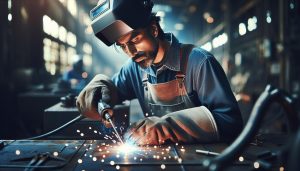
Did you know that Gas Metal Arc Welding (GMAW) is one of the most widely used welding processes in industries today? Often referred to as MIG (Metal Inert Gas) welding, this technique provides an efficient way to join metals like aluminum and steel with precision and speed. Whether you’re a seasoned welder or just starting, understanding GMAW is essential for enhancing your skills and advancing your career. GMAW utilizes an electric arc between a continuously fed filler metal electrode and the workpiece, shielded by an external gas to protect the molten weld pool from contamination. This process not only improves productivity but also ensures strong, reliable welds, making it a valuable addition to any welder’s toolkit. As you explore the nuances of GMAW, you’ll discover the various metal transfer methods and their applications, empowering you to tackle a wide range of welding challenges with confidence. Join us as we dive deeper into the world of GMAW welding and uncover its critical role in modern fabrication.
What Is GMAW Welding? Understanding the Basics
Gas Metal Arc Welding (GMAW), often simply referred to as MIG welding, is a versatile and efficient welding technique that has gained popularity in various industrial sectors. Using a continuous solid wire electrode fed through a welding gun, GMAW creates an electric arc between the base material and the wire. This arc generates heat, melting the electrode and the base material together to form a robust bond. Distinct from other welding methods, GMAW is well known for its speed and ease of use, making it a go-to choice for both beginners and seasoned professionals alike.
At its core, the GMAW process is straightforward yet effective, allowing for the welding of a wide range of metals including carbon steel, aluminum, and stainless steel. One of the fundamental aspects that sets GMAW apart is its ability to produce a stable arc, which is crucial for achieving high-quality welds. The process also often employs shielding gases, like argon or carbon dioxide, to protect the weld from contamination, enhancing the weld’s structural integrity. This makes GMAW particularly appropriate for applications where aesthetics and strength are critical.
- Speed and Efficiency: GMAW is notably faster than many other welding methods, allowing for higher productivity.
- Versatility: It’s applicable for various materials and thicknesses, making it suitable for different projects.
- Minimal Post-Weld Cleanup: The clean, spatter-free nature of GMAW reduces the need for extensive post-weld finishing.
Understanding GMAW is essential for anyone venturing into welding, as it bridges the gap between basic techniques and advanced welding practices. By mastering this technique, welders can not only enhance their skill set but also expand their career opportunities in diverse fields such as manufacturing, automotive, and construction. As industries continue to evolve, proficiency in GMAW remains a critical asset in meeting the demands for efficient and high-quality welding solutions.
The Advantages of GMAW Welding Over Other Methods
Gas Metal Arc Welding (GMAW) offers a series of compelling benefits that set it apart from other welding techniques, making it a preferred choice for many professionals. One of the most significant advantages of GMAW is its speed; the use of a continuously fed wire electrode accelerates the welding process compared to methods like TIG (Tungsten Inert Gas) welding, which requires manual feeding of filler material. This efficiency allows for higher productivity, particularly in high-volume manufacturing settings, where time is a critical factor.
Another notable advantage is its versatility. GMAW can effectively weld a variety of materials, including carbon steel, stainless steel, and aluminum, adapting to different project requirements with ease. This flexibility extends not only to the types of metals used but also to the thickness, enabling the welding of thin sheets without burning through or damaging the material, a common issue with more heat-intensive methods. Additionally, by utilizing different shielding gases such as argon, CO2, or a mixture of both, welders can optimize the process for specific applications, enhancing the quality of the weld.
The process also lends itself to minimal post-weld cleanup due to its clean and spatter-free nature, which reduces the need for extensive finishing work. This is a stark contrast to stick welding or flux-cored welding, which often requires more time-consuming cleanup due to slag and sputtering residue. As a result, not only does GMAW streamline the welding process, but it also contributes to a more efficient workflow, allowing for quicker transitions between projects.
Moreover, GMAW is particularly user-friendly, making it an excellent choice for beginners while remaining robust enough for experienced welders tackling complex tasks. The ability to produce stable arcs contributes to consistently high-quality welds, which is especially important in applications demanding aesthetic and structural integrity. With these advantages, GMAW stands out not just for its practical benefits but also for its capacity to meet the evolving demands of modern welding applications, making it an essential method in various industries, from automotive to construction.
GMAW Process: Equipment and Materials Required
To successfully execute the Gas Metal Arc Welding (GMAW) process, having the right equipment and materials is essential. The efficiency and quality of a weld can significantly depend on the tools used, making it crucial to understand the primary components involved. Among the basic requirements for GMAW, you will find the power source, welding gun, wire feeder, shielding gas, and the appropriate filler wires. Each item plays a pivotal role in securing strong, durable welds across different materials.
Essential Equipment for GMAW
- Power Source: A constant voltage welding machine is typically used for GMAW. These machines maintain a stable arc length, making the welding process smoother and more consistent.
- Welding Gun: The welding gun delivers the filler metal to the workpiece. It is crucial to choose a gun suitable for the specific thickness of the material being welded. Various types of guns are available, including the spool gun for aluminum and dedicated MIG guns for other materials.
- Wire Feeder: With GMAW, wire is fed continuously through the gun. Different feeders can adjust the speed and tension of the wire, which is essential for achieving the correct feed rate to maintain a stable arc.
- Shielding Gas: This is vital to protect the molten weld pool from contamination. Common shielding gases include argon, carbon dioxide, or a mixture of both, depending on the type of materials being welded.
- Filler Wire: The choice of wire depends on the material type and its thickness. For example, ER70S-6 is a popular choice for carbon steel, while ER4047 is often used for aluminum.
Materials Required for GMAW
The choice of materials is equally critical in the GMAW process. The primary materials welded using GMAW include:
- Steel: Both mild and high-strength steels can be fused together using appropriate filler wires and shielding gases.
- Stainless Steel: Special filler wires for stainless steel protect against oxidation during welding, ensuring the integrity of the weld.
- Aluminum: Aluminum welding requires both a different type of filler wire and a spool gun or push-pull system for effective feeding due to its softness.
- Alloys: Many metals can be welded when the right combination of wire and shielding gases is selected. Always consult compatibility charts or manufacturer guidelines for best results.
With the correct equipment and materials at hand, welders can confidently approach the GMAW process, ensuring high-quality, consistent welds across a wide range of applications. Additionally, understanding the properties of different metals and their behavior under heat can greatly enhance the outcomes of your welding projects, making continual education and experience key in this field. Safety measures should always accompany the handling of equipment and materials to ensure a protective environment during the welding process.
Step-by-Step Guide to GMAW Welding Techniques
Before starting any welding project, it’s vital to understand that Gas Metal Arc Welding (GMAW) is not only about assembling equipment; it’s also about mastering the technique. Successful GMAW requires a blend of technique, precision, and practical knowledge. Let’s delve into a step-by-step guide that will enhance your skills and ensure quality results.
Initiate the process by ensuring your workspace is clean and free of flammable materials. Set up your welding machine according to the manufacturer’s instructions, adjusting the voltage and wire feed speed to fit the material specification. For instance, a higher voltage might be required for thicker materials while a lower feed speed can help prevent burn-through on thinner sheets. Assemble your essential equipment: connect the welding gun and ground clamp securely, inspect the consumables, and double-check your gas setup.
Once you’ve prepared your setup, it’s time to practice your welding technique. Start by holding the welding gun at a 15 to 20-degree angle to the workpiece. This position helps in controlling the arc length, which is crucial for achieving the right penetration. Move the gun smoothly along the joint at a consistent speed, making sure to maintain a stable arc distance-this is typically around 1/4 inch. A zigzag motion can be effective for wider beads, whereas a straight line is ideal for narrow welds. Remember to adjust your technique based on the specific joint configuration and material type being welded.
After completing the weld, allow it to cool before inspecting the joint. Proper post-weld examination is essential to catch any defects such as undercutting or incomplete fusion. Cleaning up the weld area with a wire brush or grinder is also advisable to prepare it for any subsequent processes, such as painting or plating.
In practice, successful GMAW is about consistency and adaptability. It’s beneficial to practice on scrap materials to fine-tune your technique and adjust parameters. Engaging in this systematic method of setting up, executing, and reviewing your work not only improves your skill but also increases your confidence as a welder, paving the way for more complex projects in your welding career.
Common Applications of GMAW Welding in Industry
Gas Metal Arc Welding (GMAW) plays a crucial role across various industries due to its adaptability, efficiency, and range of applicable materials. This versatile welding technique is utilized extensively in sectors such as automotive manufacturing, construction, and fabrication, and its popularity continues to grow because of its ability to produce clean, high-quality welds with minimal spatter.
In the automotive industry, GMAW is essential for assembling components such as body frames and structural reinforcements. The process allows for quick, continuous welding, which is ideal for mass production. Moreover, its effectiveness in welding both thick and thin materials, such as stainless steel and aluminum, makes it a preferred choice for creating complex vehicle designs that require strong yet lightweight structures.
Construction is another significant area where GMAW shines. It is commonly used for welding steel structures, including beams, columns, and scaffolding. The ability to work in various positions and environments further extends its application, allowing welders to perform in challenging conditions. Additionally, GMAW’s compatibility with automation, such as robotic welding systems, enhances productivity and weld consistency, making it an attractive option for large-scale projects.
In the fabrication sector, GMAW is crucial for projects ranging from custom metal works to industrial equipment manufacturing. Its versatility means it can be adapted to various materials and thicknesses, catering to diverse client needs. The process is also favored for its speed and efficiency, providing a competitive edge in businesses that prioritize timely project completion without compromising on quality.
To summarize, GMAW’s benefits are numerous, making it indispensable across multiple industries. Its ability to produce high-quality, precise welds with a range of materials, combined with its efficiency and adaptability, secures its position as a leading welding method in modern manufacturing and construction practices.
Safety Protocols for GMAW Welding Practices
Welding, especially in processes like Gas Metal Arc Welding (GMAW), comes with inherent risks that necessitate a robust set of safety protocols. The importance of safety cannot be overstated; improper handling can lead to severe injuries and health risks, including burns, eye damage, and respiratory issues. Implementing stringent safety measures is vital in ensuring a secure and efficient welding environment.
Essential Personal Protective Equipment (PPE) is the backbone of welding safety. Welders should wear appropriate gear, including:
- Welding helmet: With proper lens shade to protect eyes from intense light and radiation.
- Gloves: Flame-resistant gloves that are durable enough to prevent burns or cuts.
- Protective clothing: Long-sleeved shirts and pants made from flame-resistant materials to shield against sparks and heat.
- Respiratory protection: Depending on the work area and materials being welded, masks or respirators may be necessary to avoid inhaling harmful fumes.
- Foot protection: Steel-toed boots provide essential protection against heavy falling objects.
Workspace Safety Considerations
A cluttered and disorganized workspace can contribute to accidents. It is imperative to maintain an orderly environment free from flammable materials. Ensure adequate ventilation to disperse harmful fumes and airborne particles generated during the welding process. This can include using exhaust fans or maintaining an open area to facilitate air circulation. Furthermore, implement a clear communication protocol to signal any hazards or safety concerns among team members efficiently.
Electrical Safety
GMAW utilizes high voltage, which necessitates specific electrical safety precautions. Always check equipment for frayed wires or faulty connections before use. Proper grounding of all welding equipment is crucial to prevent electrical shocks. Additionally, ensure that power supplies are turned off when not in use or when performing maintenance on any equipment.
By prioritizing these safety protocols, welders can work more confidently and effectively, minimizing risks and ensuring a productive work environment. Emphasizing training and adherence to safety measures not only protects individual welders but also cultivates a safety-oriented culture within welding organizations.
Troubleshooting Common GMAW Welding Issues
Common issues encountered during the GMAW (Gas Metal Arc Welding) process can significantly affect the quality of the weld, requiring welders to have a keen understanding of troubleshooting techniques. From inconsistent arc stability to poor penetration, each problem often leads to distinct symptoms that can guide the welder toward effective solutions. For instance, if you observe excessive spatter on your welds, it may indicate an incorrect voltage or wire feed speed setting, requiring immediate adjustments to achieve a clean finish.
One prevalent issue during GMAW is incomplete fusion. This occurs when the weld metal does not properly bond with the base material. Several factors could contribute to this problem, including inadequate heat input, improper gun angle, or incorrect travel speed. To remedy this, consider increasing the voltage or adjusting the travel speed to ensure sufficient heat reaches the base materials, allowing for better fusion.
Another common symptom is porosity within the weld bead, characterized by small holes or voids. This defect is often a result of contamination on the work surface or improper shielding gas coverage. Ensuring that the workpiece is clean and free from rust, oil, or other contaminants is essential. Furthermore, check that the gas flow rate is adequate and that there are no leaks in the gas lines, which could lead to shielding gas starvation during the welding process.
Wire feeding issues can also disrupt GMAW operations. Problems such as erratic wire feeding can cause inconsistent arc stability, making it difficult to maintain a uniform weld. This might be due to a kinked or damaged wire, improper roll tension on the welding machine, or a clogged contact tip. Regularly inspect your wire feed mechanism and contact tip for functionality, ensuring adequate tension and flow.
In addressing these common GMAW issues, maintaining a troubleshooting mindset not only enhances the quality of your welds but also contributes to the longevity of your welding equipment. Each adjustment and inspection is an opportunity to develop skills that elevate both personal proficiency and professional outcomes. Emphasizing training and adherence to effective troubleshooting methods is crucial to fostering a safe and efficient welding environment.
Advanced GMAW Techniques for Professionals
Advanced GMAW techniques encompass various strategies and methods that professionals use to enhance their welding precision and efficiency. One significant advancement is the implementation of pulse welding, a technique that allows for better control over heat input and minimizes distortion. By alternating between high and low amperage, this method provides more control over heat distribution, making it especially useful for welding thinner materials such as aluminum. Additionally, the pulse feature reduces spatter and helps to achieve a tighter arc, resulting in a cleaner weld bead.
Another important technique is the use of different shielding gases tailored to specific applications. While argon is commonly used for aluminum, a mix of argon and carbon dioxide is preferred for ferrous metals. Adjusting the ratio can significantly impact the weld quality. Industry professionals might experiment with different gas mixtures and flow rates to optimize their welding outcomes, ensuring that the weld penetration and bead appearance meet specific standards. Understanding the interaction between the shielding gas and weld material can provide a competitive edge for advanced welders.
Utilizing TIG-like techniques with GMAW can also yield higher-quality results. For example, maintaining an appropriate travel speed, conducting stringer beads, and using a weaving motion can enhance penetration and control. Skilled welders often simulate the finesse associated with Tungsten Inert Gas (TIG) welding, allowing for precise control while capitalizing on the speed benefits offered by GMAW.
Moreover, keeping abreast of the latest technological advances in GMAW equipment, such as wire feeders with improved tracking systems and digital controls, can drastically enhance performance. These advanced devices often come equipped with features like arc control settings and pre/post gas flow adjustments, which allow welders to achieve consistent results across varying welding positions and joint types. Familiarizing oneself with these technologies is essential for professionals looking to stay ahead in a competitive field.
By integrating these advanced methods and technologies into their workflow, welders can optimize their GMAW processes, achieving superior results that meet both industry standards and personal craftsmanship goals.
Essential Maintenance Tips for GMAW Equipment
Proper maintenance of GMAW equipment is crucial for achieving high-quality welds and ensuring the longevity of your welding tools. A well-maintained welder not only performs better but also enhances safety, reducing the risk of accidents and equipment failure. Regularly checking and caring for your equipment can lead to improved weld quality and consistency.
One of the most important components to monitor is the contact tip. This small piece of metal is subject to wear from the welding process and can degrade over time, affecting arc stability. Inspect the contact tip frequently for signs of wear or damage, and replace it as necessary to maintain optimal performance. Additionally, keep the liner of the welding torch clean and free of obstructions; a clogged liner can lead to feeding issues with the consumable wire, causing interruptions in your welding process.
Another essential maintenance task involves the inspection of electrical connections and cables. Look for any signs of wear, fraying, or corrosion. These can hinder performance and pose safety hazards. Ensure that all connections are tight and free of debris. Regularly cleaning the ground clamp and ensuring it has a secure connection to the workpiece will also improve arc stability and thus enhance the quality of your welds.
Lastly, don’t overlook the importance of shielding gas equipment in GMAW. Regularly check the gas lines, regulator, and flow meters for leaks or damage. A consistent flow of shielding gas is vital for protecting the weld pool from contamination, which can lead to defects in the weld. Keeping these components in top shape ensures that the operational environment remains optimal for high-quality welding.
Incorporating these practices into your routine not only boosts the reliability and effectiveness of your GMAW equipment but also elevates your overall welding experience. By prioritizing maintenance, welders can focus more on their craft and less on equipment failures, paving the way for professional-grade results.
Career Opportunities in GMAW Welding
The demand for skilled welders continues to rise across various industries, making GMAW welding a particularly promising career choice. GMAW, commonly known as MIG welding, is utilized extensively in sectors such as automotive, aerospace, construction, and manufacturing due to its versatility and efficiency. Welders proficient in this technique not only work with traditional materials like steel but also with aluminum and other metals, broadening their employment opportunities.
Consider what makes a welder specializing in GMAW attractive to potential employers. First, these welders must be detail-oriented and possess a strong understanding of welding techniques and safety protocols. They are often required to read and interpret blueprints and technical drawings, which is crucial for ensuring precision in fabrication and assembly. Employers highly value experience with various welding machines and the ability to troubleshoot common issues, enhancing both productivity and safety on the job.
Job roles for GMAW welders can range from entry-level positions to advanced technical roles. Here are a few examples of the opportunities available:
- Fabrication Welder: Works primarily in manufacturing settings, fabricating metal structures from raw materials.
- Maintenance Welder: Focuses on repairing or maintaining existing structures and machinery, often requiring diverse welding skills.
- Project Coordinator: Involves overseeing welding operations, ensuring quality control, and managing safety procedures.
- Welding Inspector: Requires comprehensive knowledge of welding standards to assess weld quality and compliance with regulations.
As the industry evolves, ongoing education and certification in advanced techniques and safety standards are vital for career advancement. Certifications such as those from the American Welding Society (AWS) not only enhance credibility but also increase marketability in a competitive job market. Advanced GMAW techniques, including pulsed MIG, are increasingly employed in precision work, making specialized training in these areas a valuable asset for career growth.
In summary, the landscape of GMAW welding careers is broad, offering numerous pathways for those interested in entering the field or advancing their skills. As industries continue to recognize the importance of high-quality welding, the expertise of GMAW welders will remain critical, paving the way for sustained job security and career advancement.
Comparing GMAW with MIG and Other Welding Types
Gas Metal Arc Welding (GMAW), often referred to as MIG (Metal Inert Gas), stands out in the welding world for its versatility and efficiency. While GMAW is a specific form of welding, the term “MIG” is somewhat generalized. A deeper understanding of GMAW can illuminate how it compares to other welding techniques such as TIG (Tungsten Inert Gas), Stick (SMAW), and Flux-Cored Arc Welding (FCAW).
One of the primary advantages of GMAW is its suitability for a wide range of materials, especially metals like aluminum and steel. The process involves a continuous feed of filler metal in the form of a wire through a welding gun, allowing for a high deposition rate that is often faster than TIG or Stick welding. In contrast, TIG welding, known for its precision and quality, requires a separate filler rod and offers less spatter, making it ideal for delicate projects or thin materials. However, TIG is typically slower and more complex for beginners to master. Thus, while GMAW excels in speed and efficiency, TIG holds an advantage in precision and control.
Stick welding, or SMAW, has a simplicity that makes it an excellent choice for outdoor applications and on-site repairs, where portability and adaptability are crucial. It uses a consumable electrode and requires less shielding gas, making it effective in windy conditions where gas shielding could be blown away. However, the process is slower and produces more slag compared to GMAW, potentially increasing post-weld cleanup time. For situations where a quick and clean weld is needed without the hassles of post-welding cleanup, GMAW is often the preferred choice.
In the realm of flux-cored welding, GMAW holds an edge due to its cleaner working environment with minimal smoke and fumes. Flux-cored welding is beneficial for thicker materials and can be done in various positions, but it typically generates more slag and requires more cleanup. GMAW’s flexibility makes it suitable for many scenarios, from automotive work to industrial fabrications, making it a favored method in many sectors.
Ultimately, selecting the right welding technique hinges on the project requirements, the environment, and the materials involved. Understanding these distinctions empowers welders to make informed decisions, ensuring they choose the best method for achieving quality results efficiently.
Q&A
Q: What does GMAW stand for in welding?
A: GMAW stands for Gas Metal Arc Welding. It’s a welding process that uses a continuous feed of solid wire electrode and an inert gas to protect the weld from contamination, making it suitable for various metal types and thicknesses.
Q: How does GMAW differ from MIG welding?
A: GMAW is often synonymous with MIG (Metal Inert Gas) welding, yet it encompasses a wider range of methods, including variations using different gases and wire types. Understanding the specifics can help select the best technique for your project.
Q: What types of materials can be welded using GMAW?
A: GMAW is versatile and can be used to weld materials such as mild steel, stainless steel, and aluminum. The process adapts well to thin and thick sections, making it ideal for diverse industrial applications.
Q: What safety equipment is necessary when performing GMAW?
A: Essential safety equipment for GMAW includes a welding helmet with appropriate shading, flame-resistant clothing, gloves, and respiratory protection to guard against fumes and UV radiation during the welding process.
Q: When is it best to use GMAW over other welding methods?
A: GMAW is best used for applications requiring speed and portability. It’s particularly effective for automotive, fabrication, and construction industries due to its high welding speed and ease of use on thin materials.
Q: What are some common troubleshooting tips for GMAW welding?
A: Common troubleshooting steps for GMAW include adjusting the wire feed speed, voltage settings, and check for proper gas flow to address issues like poor penetration or inconsistent weld bead appearance.
Q: How can I improve my skills in GMAW welding?
A: To improve your GMAW welding skills, practice regularly on various materials and thicknesses, seek feedback from experienced welders, and consider enrolling in specialized welding courses to enhance your technique and knowledge.
Q: Where can I find GMAW welding certifications?
A: GMAW welding certifications can typically be obtained through vocational schools or community colleges, as well as from industry-recognized organizations like the American Welding Society (AWS), offering both written and practical exams.
The Way Forward
Understanding GMAW welding is essential for anyone looking to excel in the welding industry, whether you’re a beginner or a seasoned pro. This versatile process not only delivers high-quality results but also opens doors to a range of applications across various materials like aluminum and steel. If you’re ready to enhance your skills, explore our in-depth articles on MIG vs. TIG welding differences and comprehensive safety protocols to ensure a secure working environment.
Don’t miss out on our latest insights-subscribe to our newsletter for expert tips and updates! Have questions or want to share your experiences? We encourage you to leave a comment below and join the conversation. Armed with this knowledge, take the next step in your welding journey and browse our extensive resources that dive deeper into welding techniques and equipment reviews. Explore more now and become a part of our community dedicated to welding excellence!